


POCT
Why choose REALY?
Professional Team
REALY has a development department dedicated to the development of IVD reagents. Our technical staff is responsible for process development, process improvement, and formulation development.
Quality Assurance
We have CE certificates, ISO 13485 quality system certification, Manufacture License, and Marketing Authorization in the country of origin. We are also preparing the FDA and other certificates.
Strict Quality Control
Maintain strict quality control during the process. Our product safety is checked through extensive testing, sampling and verification procedures to meet final product specifications.
Sales to The World
We participate in medical exhibitions in many countries such as Medlab, Medica, and AACC every year. The sales network has covered more than 80 countries and regions, distributing high-quality products at very competitive prices.
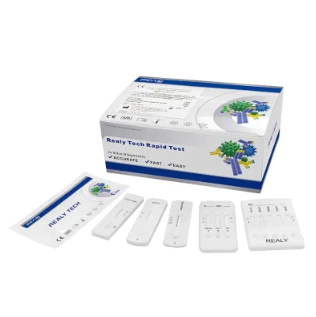
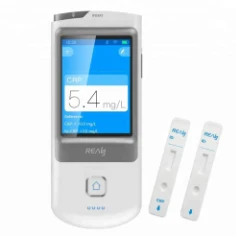
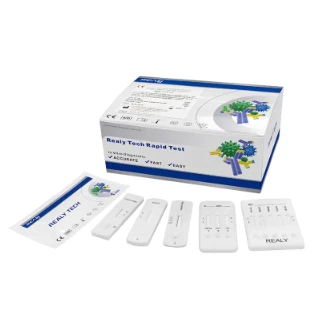
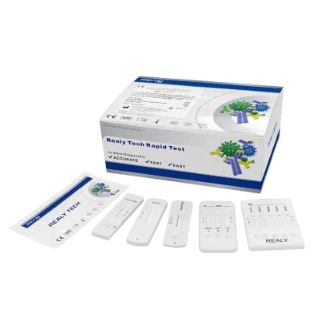
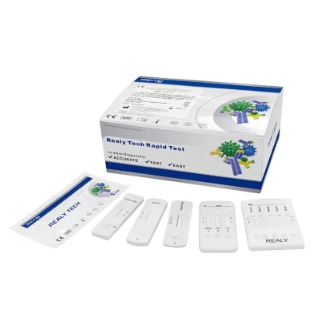
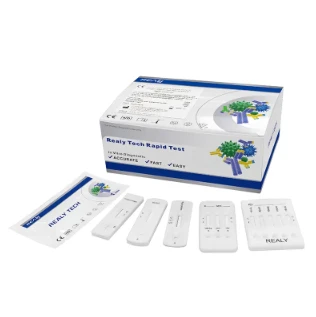
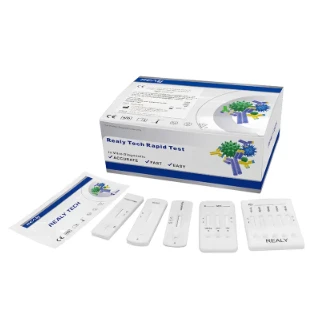
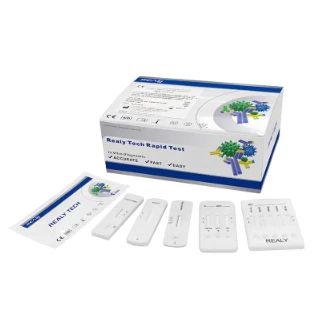
Point-of-care testing (POCT), also called near-patient testing or bedside testing, is defined as medical diagnostic testing at or near the point of care—that is, at the time and place of patient care.
POCT is often accomplished through the use of transportable, portable, and handheld instruments (e.g., blood glucose meter, nerve conduction study device) and test kits (e.g., CRP, HBA1C, Homocystein, HIV salivary assay, etc.). Small bench analyzers or fixed equipment can also be used when a handheld device is not available—the goal is to collect the specimen and obtain the results in a very short period of time at or near the location of the patient so that the treatment plan can be adjusted as necessary before the patient leaves.
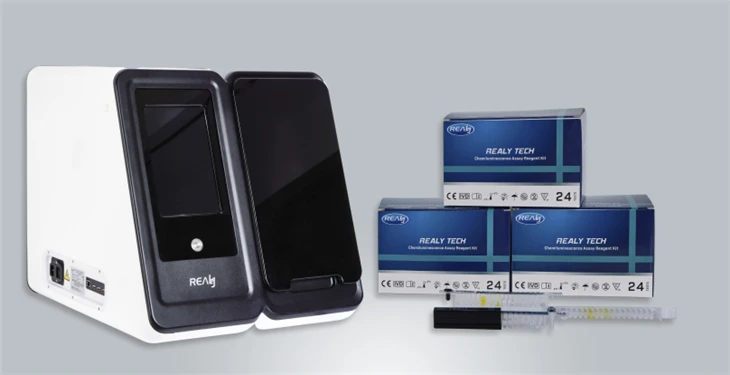
Features of POCT
- POCT should be simple to use.
- Reagents and consumables should have durable resistance during storage and use.
- POCT results should align with established laboratory methods.
- POCT should ensure safety during testing.
Important Benefits of Point-of-Care Testing
POCT is Faster Than Laboratory Testing
The capability to conduct tests and receive instant results near the patient is the main advantage of point-of-care testing. The test results only take a few minutes to obtain, making it significantly faster than laboratory testing.
POCT Can be Done Anywhere and Anytime
One of the main highlights of point-of-care testing is that it can be done anywhere. Because of its portability, point-of-care testing can detect infectious diseases in remote or resource-limited areas that do not have access to large laboratories in the city.
POCT Can be Performed by Any Healthcare Practitioner
The latest point-of-care devices are now more compact and easier to use; even staff who are not expertly trained in clinical laboratory services can use them.
POCT is Beneficial in Emergency Situations
Point-of-care can help alleviate the overcrowding in the emergency room by reducing the time it takes to treat patients. It can also be used to focus on the prevention, early detection, and monitoring chronic conditions.
POCT is Cheaper Than Laboratory Testing
Point-of-care testing devices are generally smaller and could be brought anywhere. They are also inexpensive compared to the usual diagnostic equipment used by laboratories.
Types of Point of Care Testing
Types of POCT: Inflammation
Instant testing for whole-process C-reactive protein (hsCRP+conventional CRP)
Instant testing for procalcitonin (PCT).
Types of POCT: Cardiac
Instant testing for N-terminal pro-brain natriuretic peptide (NT-proBNP)
Instant testing for cardiac troponin I (cTnl), myoglobin (MYO), and creatine kinase isoenzyme (CK-MB).
Type of instant detection: Tumor
Alpha-fetoprotein (AFP) instant detection
Prostate-specific antigen (PSA) instant detection.
Types of POCT Devices
Small Handheld POCT Devices
There are a variety of small POCT devices on the market, ranging from simple blood glucose meters to, for blood gas analysis, sophisticated small cassette devices. These devices are truly portable and are often used by the patient themselves or by a healthcare professional near the patient, such as at the bedside, in a clinic, or in the patient's home.
Larger Benchtop POCT Devices
These devices are similar in design to some of the instruments used in central laboratories. They are usually variations of devices used in traditional laboratories. They have high throughput and high accuracy. These point of care testing devices can be moved to outpatient clinics, hospitals and community health departments to provide services such as diagnostic testing and care.
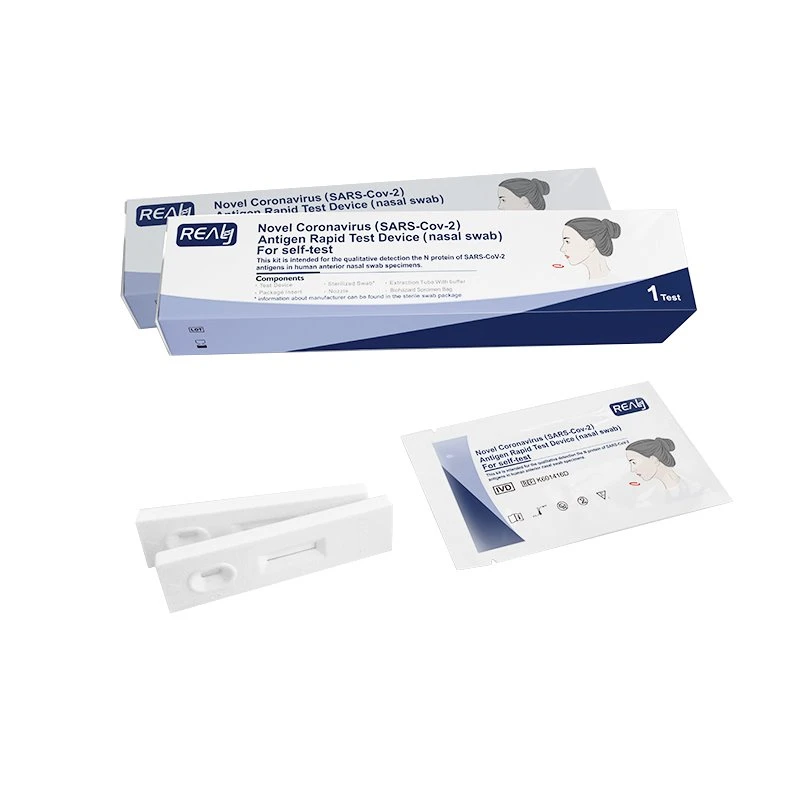
Available POCT Devices
Blood gases and electrolytes analyzers
Coagulation
Blood Chemistries, ex. Glucose, cholesterol, uric acid
Drug abuse
Pregnancy screening
Cardiac markers
Hemoglobin and Hematocrit
When to Use Point of Care (POC) Tests?
Although the option of point-of-care testing is widely available for many health parameters ranging from pregnancy to drug abuse, point-of-care (POC) testing has proved to be particularly useful for the followings:
1
The consistent screening of people with chronic diseases.
2
Rapid screening of highly infectious diseases.
3
Emergency situations where immediate decision making is decisive.
4
Remote, resource-limited, or disaster-ridden settings.

POCT for Hematology
- Prothrombin time analyzers, for evaluating blood clots.
- APTT testing, for hemostatic assessment.
- D-dimer testing, to rule out pulmonary embolism or DVT.
- Viscoelastic assays, for trauma and obstetrics.
- Activated clotting time testing, for monitoring heparin levels.
- Malarial antigen testing, for screening for malaria.
POCT for Clinical Trials and Research
- Identifying participants with anemia.
- Identifying participants with blood disorders.
- Screening for infections.
- Monitoring patients’ reactions to clinical trial drugs (companion diagnostics).
Where Can POCT be Used?
Home use, self-testing
Pharmacy
Paramedical support, ambulance
Nursing home or aged care centre
General medical practice, primary care (US terminology: POL, Physicians office laboratory)
Rural (remote) hospital or health clinic
Critical care facility in major hospital (ED, ICU, CCU, etc)
Hospital ward or hospital clinic
Sports clinic
Workplace drug screening.
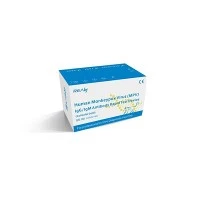
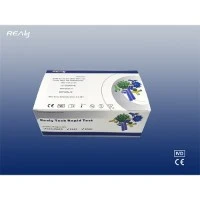
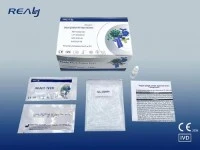
Kit Contents of POCT
Each Kit Contains:
Antibody test card in a sealed pouch with desiccant
Sample diluent
User manual: 1 piece/box.
A Test Card Contains:
A plastic shell and a reagent strip which is composed of a sample pad, a colloidal gold pad, nitrocellulose membrane with two test lines (these two lines are coated with anti-human IgM and IgG antibody respectively), the control line, absorbent paper and liner.
Sample Diluent Composition:
Phosphate buffered saline, proteins, detergent, preservative, stabilizer.
General POCT Testing Procedures
A Sample is Obtained for Analysis
This could be a drop of blood for blood glucose concentration via a glucometer or urine for beta-hCG. Various requirements regarding the patient's state, the specimen's state, and the preparation needed for accurate testing exist.
The Sample is Applied to the POCT Device
Immediately before this step, a reagent may facilitate accurate testing. This allows for the distribution of the antigen throughout the solution and increases test accuracy. In some types of POCT, the sample can be directly applied to the device, which typically includes a disposable cartridge for analyzing the analyte. This disposable cartridge can be disposed of after use, reducing the risk of cross-contamination.
Read Test Result
Once the test is performed, the result is obtained and can be directly transferred to the patient's electronic medical records (EMR) if the POCT device is integrated or interfaced with the EMR system.
- Test kits can be stored at room temperature, as long as the temperature never exceeds 30° C. The temperature must be tracked daily and range between 2-30° C.
- The temperature gauge used at the site should record the high and low temperature each day as well as the current temperature. This temperature must be tracked daily. A template for an environmental monitoring log is provided for this purpose.
- If a temperature outside 2-30°C is recorded, quality control testing of all stored kit lots must be done, before further client testing can continue.

Our certificate
We have passed various certificates such as CE and ISO, and the products we provide have quality assurance.


Common Problems of POCT
As one of the most professional poct manufacturers and suppliers in China, we're featured by quality products and good service. Please rest assured to wholesale cheap poct from our factory. Contact us for more details.
compact testing equipment, platelet count poct, microbiology poct apparatus